
Last updated September 10, 2026
Full 25-point door and opener safety check with every visit - springs, cables, rollers, tracks, and your LiftMaster or Chamberlain opener included
You get a price before we start. It does not change when the truck arrives.
 Before
 After
After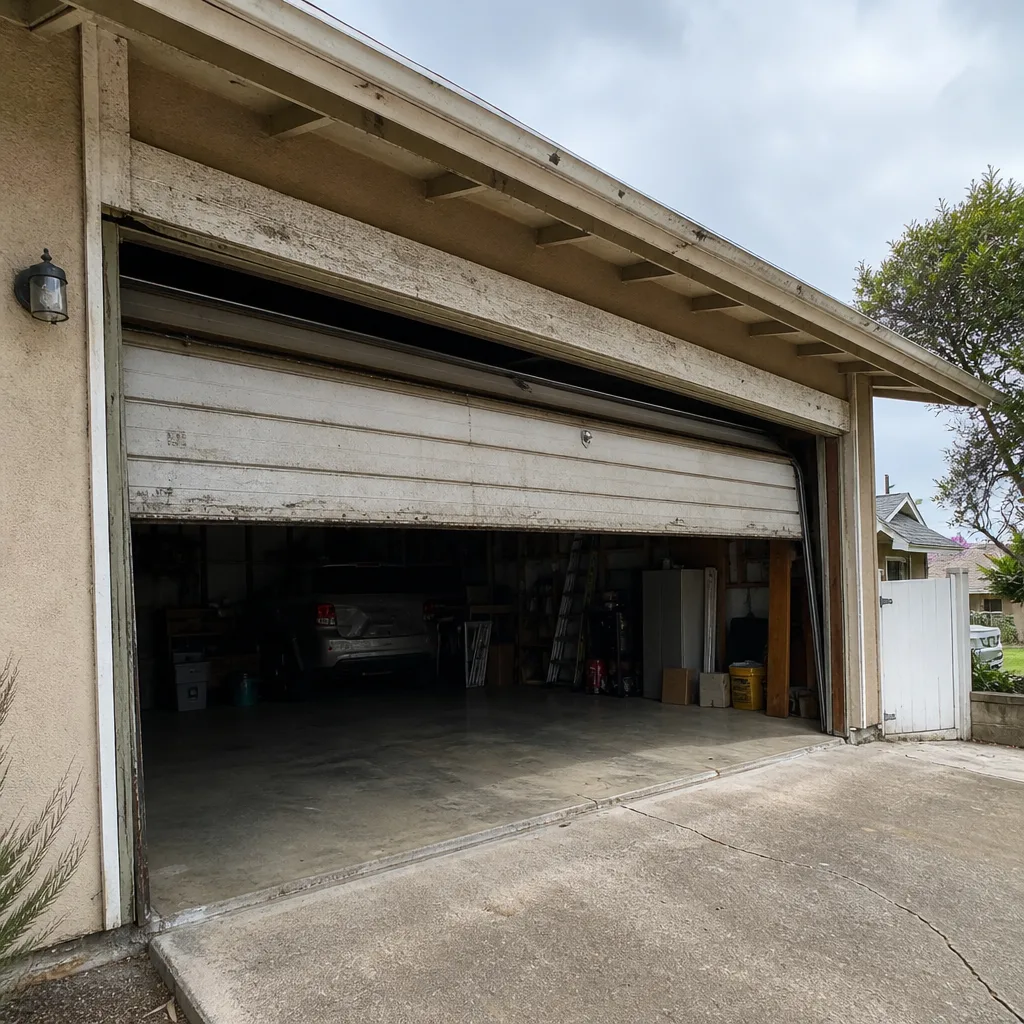 Before
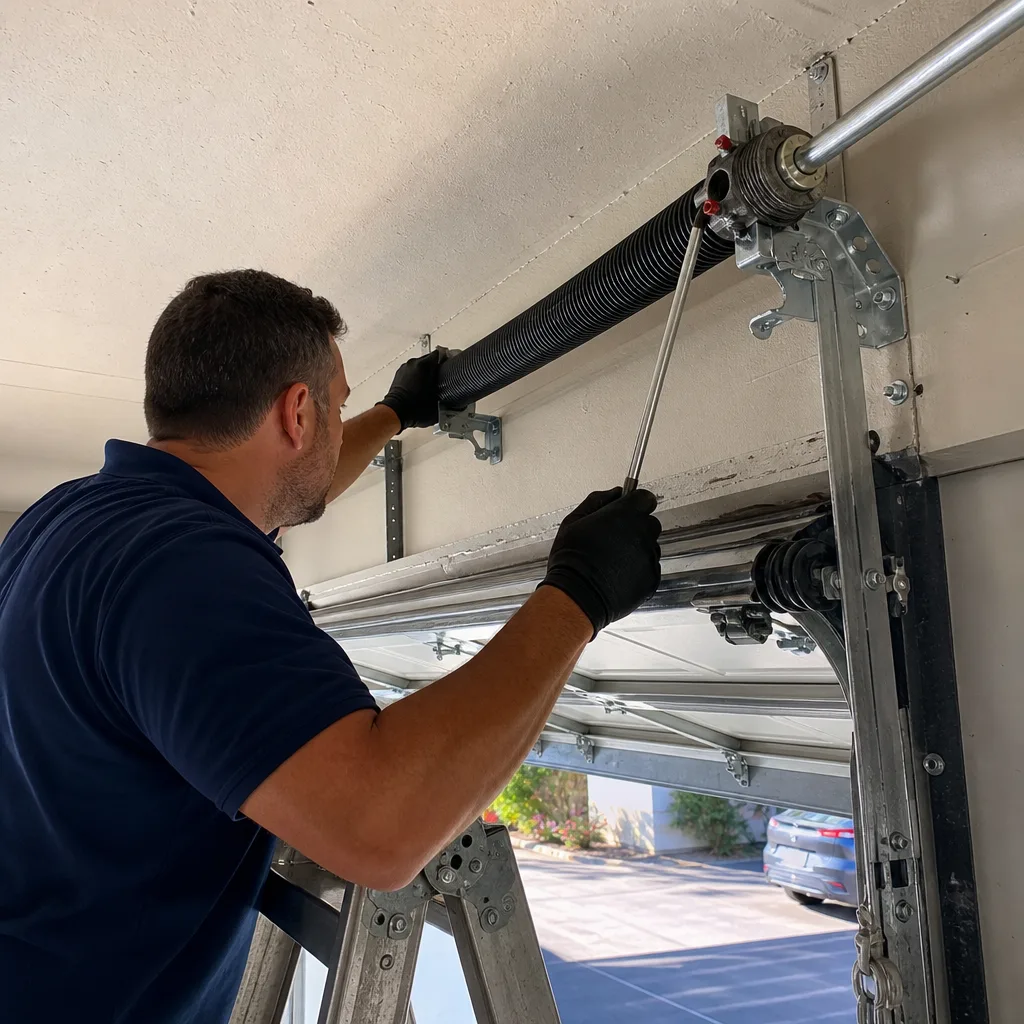 After
After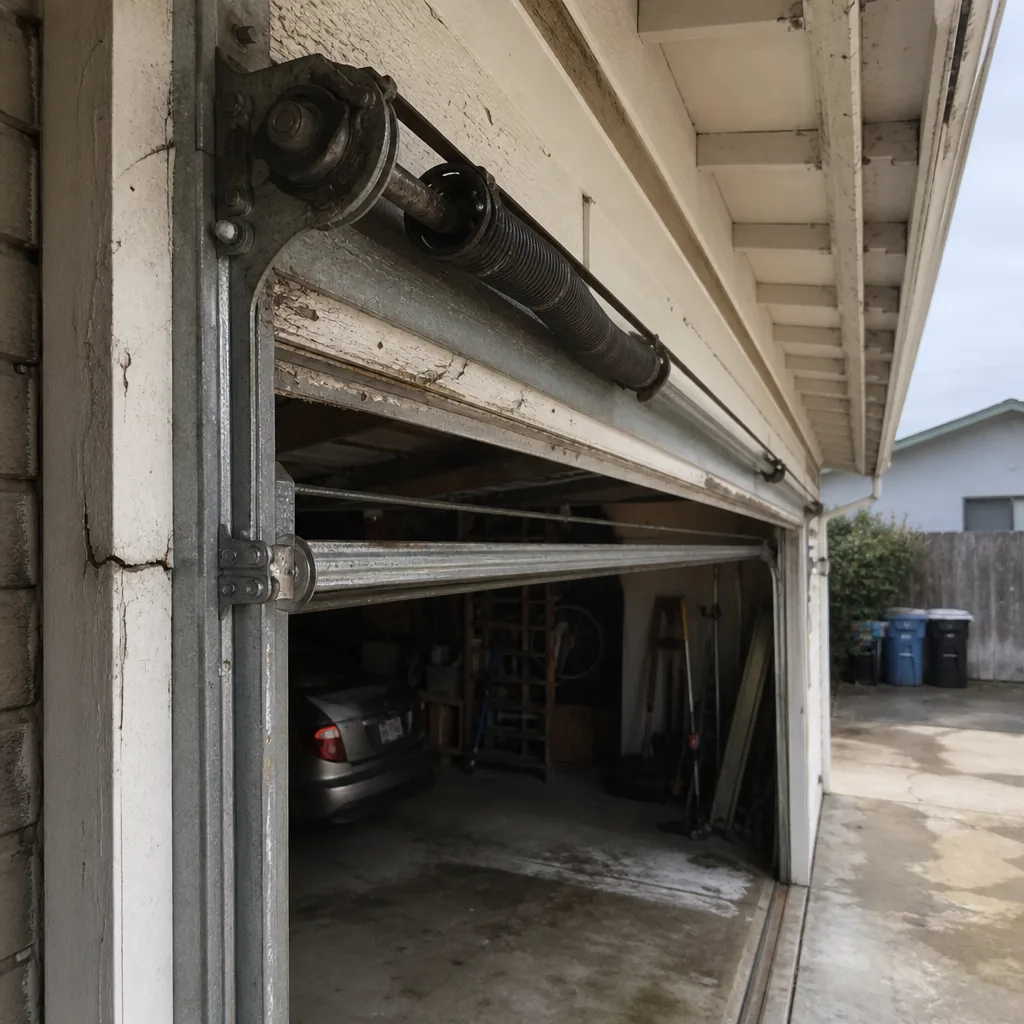 Before
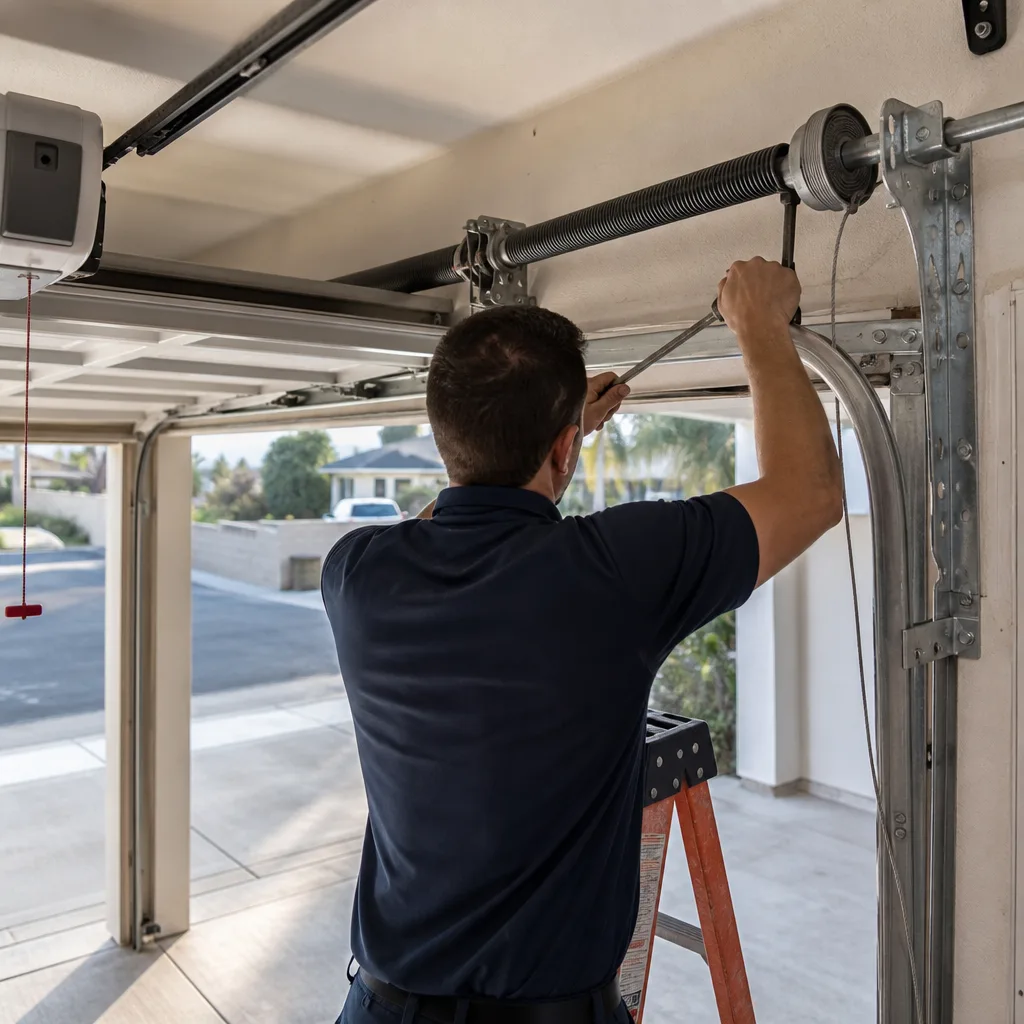 After
AfterGarage Door Permits, Codes & Inspections in CA: What You Need to Know
A homeowner in Olivenhain replaced a standard door with an insulated steel door and sailed through without permits. Her neighbor replaced the same door type and triggered a WUI compliance inspection because her parcel sits inside a State Responsibility Area boundary. Same zip code. Different rules. In this guide, you’ll learn exactly which garage door projects in Encinitas and across California require permits, which do not, and how to avoid the costly mistake of discovering unpermitted work during a home sale. For related reading, see our Garage Door Warning Signs: A Encinitas Homeowner’s Reference Guide. We’ve pulled the actual thresholds from the California Residential Code, mapped San Diego County’s wildfire zones, and laid out a plain decision path so you know before you start.
Quick Answer
Most like-for-like garage door replacements in California do not require a building permit, but you need one if the project involves structural header modifications, new electrical wiring for the opener, or a change in fire rating. In Encinitas and surrounding San Diego County areas, parcels inside Wildland-Urban Interface boundaries face additional material requirements even when no permit is technically required.
Table of Contents
- When Is a Permit Required for Garage Door Work in California?
- The Like-for-Like Exemption: What Counts and What Does Not
- WUI Zones and Fire-Rated Door Requirements in Encinitas
- Title 24 Energy Compliance and Insulation Rules
- Garage Door Opener Wiring and Electrical Permits
- What Happens When Unpermitted Work Is Discovered During a Home Sale
- A Simple Flowchart: Does Your Project Need a Permit?
- What to Expect During a Garage Door Inspection
When Is a Permit Required for Garage Door Work in California?
California building permit rules for garage doors are more conditional than most homeowners expect. The California Residential Code, which governs single-family and two-family dwellings, does not treat all garage door projects the same. The deciding factors are specific: door weight, whether the structural header above the opening is being altered, the electrical load of the opener, and whether the garage is attached to the dwelling.
Under CRC Section R105.2, work that does not alter the structural members, does not change the egress requirements, and does not affect the fire-resistance rating of the assembly is generally exempt from permit requirements. This covers the majority of straightforward door replacements. But the exemptions have hard edges, and crossing them pulls the entire project into permit territory.
Here are the specific triggers that require a building permit in California:
- Structural header modification: If you widen the opening, raise the height, or replace a deteriorated header with a different size or material, you need a permit. The header carries the load from the wall above, and any change affects the structural engineering of the building.
- Fire-resistance rating change: If the existing door has a fire rating and the replacement does not, or vice versa, a permit is required. This commonly arises when homeowners switch from a solid wood door to an uninsulated steel door in a fire-rated assembly.
- New electrical circuit or wiring: Installing a new garage door opener where none existed, or running a new dedicated circuit to support a higher-horsepower opener, requires an electrical permit under the California Electrical Code.
- Attached garage energy compliance: When the garage shares a wall with conditioned living space, Title 24 energy standards may require documentation of insulation values.
- Wildland-Urban Interface zones: In designated WUI areas, even a like-for-like replacement may require compliance documentation with Chapter 7A of the California Building Code, which governs exterior wildfire exposure.
In Encinitas, the Building Division of the City of Encinitas processes permits for projects within city limits. Unincorporated areas of San Diego County, including portions of Olivenhain and surrounding communities, fall under the County of San Diego Department of Environmental Health and Development Services. The two jurisdictions have slightly different submittal requirements, though both follow the same California Residential Code baseline. We’ve worked in both offices over our 42 years in this trade, and the difference is usually in the paperwork, not the standard.
One detail that catches homeowners: permit exemptions are for the work itself, not for the product. You can buy any fire-rated door you want without a permit. The permit question only arises when you install it in a way that triggers the code.
The Like-for-Like Exemption: What Counts and What Does Not
The “like-for-like” exemption is the most misunderstood concept in garage door permitting. Homeowners and some contractors interpret it too broadly, assuming that any replacement of an old door with a new one of the same size is automatically exempt. That is not what the code says.
Under the California Residential Code, a like-for-like replacement means the new door matches the existing door in all of these respects: dimensions of the opening, weight load on the supporting structure, fire-resistance rating, and method of operation. Change any of these, and the exemption disappears.
Here is how this plays out in practice:
- Same size, same material, same opener: You remove a 16-by-7-foot uninsulated steel door and install a new 16-by-7-foot uninsulated steel door, reusing the existing track and opener. No permit required in most jurisdictions.
- Same size, heavier material: You replace a hollow-core wood door with a solid wood or insulated steel door that adds significant weight. The header and spring system must be recalculated. This is not like-for-like, and a permit may be required.
- Same size, added insulation: You upgrade to a higher R-value insulated door. If the garage is attached to the house, Title 24 documentation may be triggered even if the building permit is not.
- Same size, different fire rating: You replace a 20-minute fire-rated door with a non-rated decorative door. Permit required, and the inspector will flag it.
- Manual to automatic: You add an opener where the door was manually operated. Electrical permit required for the new wiring and outlet.
In Encinitas, we see this most often with coastal properties where homeowners want to upgrade from a basic steel door to a higher-end Clopay or Amarr insulated model for corrosion resistance and energy efficiency. The upgrade makes sense for the salt air, but the added weight and insulation value can shift the project out of exemption territory if the garage is attached.
Our advice: before you order, weigh the new door and compare it to the old one. Check the fire-rating label on the existing door, usually found on the edge or back panel. If anything has changed, call the building department with specifics. A five-minute phone call beats a red tag on the job.
WUI Zones and Fire-Rated Door Requirements in Encinitas
San Diego County has some of the most extensive Wildland-Urban Interface designations in California, and portions of Encinitas fall within these boundaries. If your property is in a State Responsibility Area or a Very High Fire Hazard Severity Zone, the materials you use on your garage door matter regardless of whether a building permit is required for the installation.
Chapter 7A of the California Building Code sets the standards for exterior wildfire exposure. For garage doors, the critical requirement is the exterior surface material’s ignition resistance. In designated WUI zones, garage doors must comply with one of these:
- Noncombustible material, such as steel or aluminum
- Ignition-resistant material passing the specified ASTM E-84 or California Department of Forestry tests
- Material assembly with a one-hour fire-resistance rating
The practical effect in Encinitas is that certain neighborhoods and parcels have restrictions that their immediate neighbors do not. Properties north of Elfin Forest Road, portions of Olivenhain, and some eastern Encinitas parcels mapped into SRAs may face WUI compliance verification even for a straightforward replacement. The determining factor is not the zip code. It is the specific parcel boundary.
You can check your status through the Cal Fire Fire Hazard Severity Zone map or the San Diego County GIS parcel lookup. If your property is in a WUI zone, document the door’s compliance certification before installation. The manufacturer provides this, typically as a printed label or specification sheet. Keep it with your home records.
We have installed Raynor and Clopay doors in WUI-compliant configurations for Encinitas homeowners, and the difference from standard models is usually in the exterior skin material and the certification paperwork, not the appearance. The door looks the same. The documentation is what protects you if the question ever arises in a sale or insurance review.
Title 24 Energy Compliance and Insulation Rules
California’s Title 24, Part 6, the Building Energy Efficiency Standards, applies to garage doors when the garage is attached to conditioned living space. The logic is straightforward: a poorly insulated garage door becomes a thermal bridge, bleeding heating and cooling energy from the house into an unconditioned space.
The compliance threshold is based on the U-factor of the door assembly, which measures heat transfer. Lower U-factors mean better insulation. For climate zone 7, which includes Encinitas and coastal San Diego County, the prescriptive compliance path requires:
| Door Configuration | Maximum U-Factor | Approximate R-Value Equivalent |
|---|---|---|
| Single garage door (up to 9 ft wide) | 0.37 | R-8 or higher |
| Double garage door (over 9 ft wide) | 0.37 | R-8 or higher |
| Doors in additions or alterations with full compliance documentation | 0.31 | R-10 or higher |
Most modern insulated steel doors from major manufacturers meet these standards. A Clopay Classic Collection or Amarr Stratford with polyurethane foam core typically achieves U-factors between 0.19 and 0.32, well within compliance. The issue is not the door; it is the documentation.
For new construction and substantial alterations, the installer or homeowner must provide the Title 24 compliance documentation, usually through the manufacturer’s certificate or a HERS rater verification. For a simple replacement where no permit is pulled, this documentation is not submitted to the city. But it becomes relevant in two scenarios: if the replacement is part of a larger permitted remodel, or if the home is sold and the buyer’s inspector questions the energy performance of the garage.
In Encinitas, where many homes date to the 1970s and 1980s with original uninsulated doors, we regularly recommend upgrading to an R-10 or higher door not for code compliance but for comfort. The garage abuts a bedroom or kitchen, and the homeowner feels the temperature difference. The Title 24 standard is a floor, not a ceiling. A higher R-value pays back in utility bills and in the home’s marketability.
One local note: the marine layer and salt air in Encinitas accelerate corrosion on uninsulated single-skin doors. An insulated door with a thermal break and proper weathersealing lasts longer here. That is not a code issue. It is a durability issue we have observed over four decades of working on coastal properties.
Garage Door Opener Wiring and Electrical Permits
The garage door opener is where many permit-exempt door replacements unexpectedly trigger a separate electrical permit. The California Electrical Code, based on NFPA 70, requires permits for new electrical circuits, outlet additions, and any wiring that extends an existing circuit to serve a new load.
Here is the breakdown of common opener scenarios:
- Replacing an existing opener on the same outlet: No electrical permit required. This is maintenance, not new installation.
- Installing an opener where none existed: Electrical permit required. A new dedicated circuit or extension of an existing circuit to a new outlet location is new work.
- Upgrading to a higher-horsepower opener requiring a larger circuit: Electrical permit required if the existing circuit is inadequate. A 3/4 HP or 1 HP opener on a 15-amp circuit shared with garage lighting may overload the branch. The electrician must run a new 20-amp dedicated circuit.
- Adding a battery backup system with hardwired charging: If the battery backup unit requires its own connection beyond a simple plug-in, permit requirements depend on the installation method. Plug-in units are maintenance. Hardwired charging circuits are new work.
California law since 2019 requires battery backup on all new garage door opener sales and installations. For replacement of an existing opener, the battery backup is mandatory if the opener is manufactured on or after July 1, 2019. This is a product requirement, not a permit trigger. But it affects your opener selection. We carry LiftMaster and Chamberlain models with integrated battery backup on our trucks, and the battery is charged through the standard motor unit power cord. No additional wiring, no additional permit.
In older Encinitas homes, especially in Leucadia and Cardiff-by-the-Sea with original 1960s and 1970s electrical panels, we sometimes find that the garage circuit cannot support a modern opener plus the homeowner’s added refrigerator, freezer, or workshop equipment. The panel upgrade is a separate project with its own permit, but identifying the issue early prevents a failed inspection or a tripped breaker on move-in day.
Safety note: garage door opener electrical work involves 120-volt household current. If you are not a licensed electrician, do not attempt to run new circuits or modify panel wiring. The risk of shock or fire is real, and unpermitted electrical work can void your homeowner’s insurance. We work with licensed electricians on projects that require new circuits, and we coordinate the mechanical and electrical permits so the job is done right from the start.
What Happens When Unpermitted Work Is Discovered During a Home Sale
This is where the permit question becomes expensive. In California, sellers must disclose material facts affecting the property’s value and desirability. Unpermitted construction is a standard disclosure item. When a buyer’s inspection, appraisal, or title review reveals work done without required permits, the consequences follow a predictable path.
- The buyer demands resolution. This usually means one of three outcomes: the seller obtains a retroactive permit and passes inspection, the seller credits the buyer for the estimated cost of permitting and correcting deficiencies, or the deal is renegotiated or canceled.
- The retroactive permit process is harder than the original permit. The building department requires full plans, may demand exposed framing for inspection, and can require costly corrections that would have been trivial during original construction. In some cases, they require partial demolition to verify concealed work.
- Liability traces backward. If the seller used a contractor, the contractor may face disciplinary action from the Contractors State License Board for work without permits. The seller may have a claim against the contractor for misrepresentation. If the seller did the work themselves, the liability rests with them.
- The title company may flag unpermitted structures as encumbrances. This can delay closing until resolved.
In Encinitas, where home values are high and buyers are often relocating from out of state with tight relocation timelines, a permit issue can blow up a 30-day close. We have been called in to provide estimates for retroactive corrections on garage door installations where the previous owner used an unlicensed handyman or a low-bid contractor who skipped the permit to save time.
The protection is simple: before work begins, determine whether a permit is required. If it is, pull it. If you hire a contractor, verify that they will pull the permit as part of the contract. A legitimate contractor has no reason to avoid permitting; it protects them as much as it protects you. At Mainspring Garage Door Co., we pull permits when required, coordinate inspections, and provide the homeowner with the final approved documentation. It is part of a square deal.
One specific Encinitas consideration: properties in the coastal zone may have additional California Coastal Commission or local coastal development permit requirements for exterior modifications. Garage door replacements rarely trigger these, but if the project involves structural changes to a seaward-facing facade or a historic property, verify with the city planning department. We have seen one case in the past decade where a historic district review was required for a carriage-house-style door replacement. It was an exception, but exceptions matter when they are your house.
A Simple Flowchart: Does Your Project Need a Permit?
Here is the decision path we use when homeowners call us about a new garage door project in Encinitas or surrounding San Diego County. Answer these questions in order:
- Are you replacing an existing door with one of the same size, same material weight, and same fire rating, with no structural changes?
- If no: You need a building permit. Stop here and call the building department.
- If yes: Proceed to question 2.
- Is the property in a Wildland-Urban Interface zone or State Responsibility Area?
- If yes: You need WUI compliance documentation for the door material, even if no building permit is required. Verify with the manufacturer.
- If no: Proceed to question 3.
- Is the garage attached to the house, and are you changing to a door with a different insulation value?
- If yes: Title 24 documentation may be required if the project is part of a permitted alteration. For standalone replacement, document the U-factor for your records.
- If no: Proceed to question 4.
- Are you adding a new opener, upgrading horsepower, or running new electrical?
- If yes: An electrical permit is required for the wiring work. The door replacement itself may still be exempt.
- If no: Proceed to question 5.
- Are you in the Encinitas coastal zone or a historic district with design review requirements?
- If yes: Check with city planning for any additional review.
- If no: Your project likely requires no permit. Keep your receipts and product specifications for future sale documentation.
When in doubt, call the building department with your specific project details. The Encinitas Building Division and San Diego County Development Services both answer questions by phone. A brief conversation can save weeks of correction later.
What to Expect During a Garage Door Inspection
If your project does require a permit, the inspection process in Encinitas and San Diego County is straightforward if the work is done right. There are typically two inspection points for a permitted garage door replacement: the rough inspection, if structural work was done, and the final inspection.
For a standard door replacement with no structural changes, only a final inspection is required. The inspector verifies:
- The door matches the approved plans and specifications
- Fire-rating labels are present and legible if required
- The opener is installed with proper safety reversing devices and photo-eye alignment
- Electrical work, if any, is done to code with proper grounding and GFCI protection
- WUI compliance documentation is on-site if the property is in a designated zone
The inspector will test the door’s auto-reverse function by placing a 2-by-4-inch board flat on the floor in the door’s path. The door must reverse within two seconds of contact. This is a standard test under UL 325, and any opener we install from LiftMaster or Chamberlain is factory-set to exceed this standard. But field conditions matter. An uneven floor, a misaligned photo eye, or a binding track can cause a failure. We test this before the inspector arrives.
In our experience, most final inspections in Encinitas take 15 to 30 minutes. The inspector is checking for code compliance, not cosmetic perfection. A clean, accessible installation with documentation ready passes. A cluttered garage with the opener manual lost and the fire-rating label painted over does not.
If the inspection fails, the correction notice specifies the deficiency and the re-inspection process. There is typically no additional fee for the first re-inspection if the correction is minor and completed promptly. At Mainspring Garage Door Co., we schedule the inspection, meet the inspector, and handle any corrections under our 90-Day Done Right Promise. If we installed it, we stand behind it through final approval.
Common Mistakes to Avoid
- Assuming all replacements are permit-free. The like-for-like exemption has specific boundaries. Changing the door weight, fire rating, or dimensions without checking can trigger a retroactive permit requirement.
- Ignoring WUI boundaries. Two properties on the same Encinitas street can have different wildfire zone status. Check your specific parcel, not your neighborhood generally.
- Hiring a contractor who refuses to pull permits. A contractor who asks you to pull the permit as the homeowner, or suggests skipping it to save time, is creating liability you will carry. Licensed contractors are required to pull permits for work they perform.
- Discarding product documentation. Fire-rating labels, WUI compliance certificates, and Title 24 specification sheets belong in your home file. You cannot prove compliance without them.
- Overlooking electrical requirements for opener upgrades. A new 1 HP opener on a 40-year-old 15-amp circuit is a problem waiting for a breaker trip or an inspector’s red tag.
- Waiting until listing day to discover the issue. If you are planning to sell in the next few years, verify now that past work was permitted. Correcting it on a sale timeline costs more and causes stress you do not need.
When to Call a Professional
Call a qualified garage door contractor when your project involves structural changes, electrical work, WUI zone requirements, or any uncertainty about permit status. The cost of a professional consultation is small compared to the cost of a failed inspection, a delayed home sale, or an unsafe installation. Mainspring Garage Door Co. offers free estimates in Encinitas - call (760) 565-5674. We will walk through your project, identify the permit requirements, and handle the paperwork if needed. No surprises on the bill, and we will be there when we say.
Frequently Asked Questions
Most like-for-like replacements do not require a permit, but you need one if the project changes the door dimensions, structural header, fire rating, or electrical wiring. Call the Encinitas Building Division or San Diego County Development Services with your specific project details to confirm.
Permit fees vary by jurisdiction and project value. In Encinitas and San Diego County, a simple garage door replacement permit typically runs between $150 and $400, plus plan check fees if required. Electrical permits for opener wiring are separate and usually $80 to $150. Call (760) 565-5674 and we can help estimate your total permit cost based on the scope.
WUI stands for Wildland-Urban Interface, a designation for areas where developed land meets wildland vegetation. In California, WUI zones impose additional fire-resistant material requirements on exterior building components, including garage doors. Check your specific parcel on the Cal Fire Fire Hazard Severity Zone map or the San Diego County GIS system. Do not rely on your zip code or neighborhood name.
Yes. California sellers must disclose unpermitted construction, and buyers’ inspections routinely flag it. The seller typically must obtain a retroactive permit, credit the buyer, or risk the deal. Retroactive permits are more expensive and intrusive than original permits. Verify permit status before listing.
Adding insulation to an existing door does not typically require a permit. Replacing the door with a pre-insulated model may trigger Title 24 documentation requirements if the garage is attached to conditioned living space. The permit question depends on whether the replacement itself is like-for-like in other respects.
Replacing an existing opener on the same outlet does not require a permit. Installing an opener where none existed, or running new electrical circuits, requires an electrical permit. For safety, garage door opener installation involves high-tension spring systems and electrical connections. We recommend professional installation. Call (760) 565-5674 for a free estimate - estimates are free, and we carry LiftMaster and Chamberlain models with battery backup on every truck.
The Bottom Line
California garage door permits are conditional, not categorical. The same replacement project can be permit-free on one Encinitas parcel and require full inspection on another, depending on WUI boundaries, structural changes, and energy compliance. The key is to verify before you start, document everything, and work with a contractor who handles permits as standard practice. At Mainspring Garage Door Co., we have navigated these requirements for 42 years. We quote the flat price before the wrench comes out, pull permits when required, and stand behind every job with our 90-Day Done Right Promise in writing. If you are planning a garage door project in Encinitas, call us at (760) 565-5674 for a free estimate. We will tell you exactly what your project requires and deliver a square deal with no surprises on the bill.
Written by Carl Dutton, Owner at Mainspring Garage Door Co., serving Encinitas since 2016.